
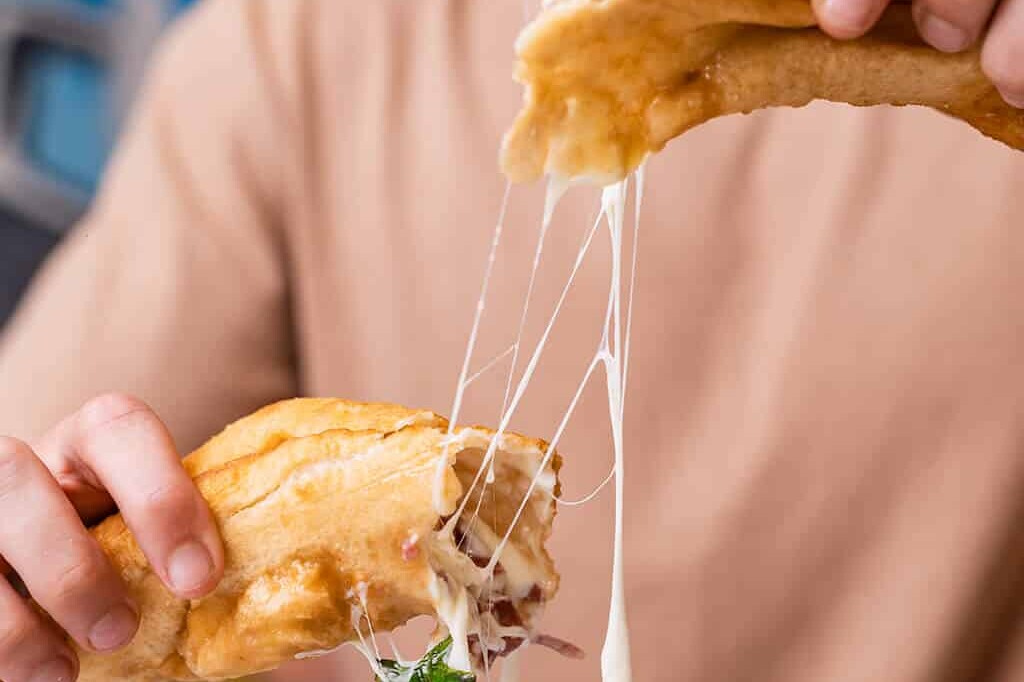
At Pizza Fritta 180 in Surry Hills, the question most first-timers ask isn’t how the dough is cooked — it’s what’s inside.
Because pizza fritta doesn’t announce its fillings the way a baked pizza does. There are no visible toppings, no map of ingredients to study before you order. The filling is sealed inside the dough and revealed only when you tear it open.
That mystery is part of the appeal. But the fillings themselves are deeply considered — rooted in Neapolitan tradition, calibrated to complement the fried dough, and refined over generations of street-food cooking.
Here’s what traditionally goes inside pizza fritta, and why each combination works the way it does.
The Philosophy Behind Pizza Fritta Fillings
Pizza fritta fillings are chosen to balance the richness of the fried dough — typically combining a soft, creamy base with a salty or cured element that provides contrast without overwhelming the crust.
This is not the same logic as a calzone, where the filling is often the centrepiece and the dough is largely a vessel. In traditional Neapolitan pizza fritta, the dough is the hero. The filling is the counterpoint.
Rich enough to be satisfying. Restrained enough to let the crust speak.
Traditional fillings fall into three broad types: soft, fresh cheeses such as ricotta, fior di latte and provola; cured or cooked meats like cicoli, salame napoletano and prosciutto cotto; and simple vegetables like escarole, tomato, olives and capers.
Nothing too wet — excess moisture steams the dough from the inside and destroys the crisp exterior. Nothing too dry — that makes the experience dense and one-dimensional. The balance is everything.
Ricotta and Cicoli — The Original
Ricotta and cicoli is the oldest and most emblematic pizza fritta filling in Neapolitan tradition — a combination born from cucina povera, the resourceful cooking of southern Italy’s working households.
Cicoli (sometimes written ciccioli) are the golden, crispy remnants left after pork fat is rendered for lard — a byproduct of the lard-making tradition that defined southern Italian cooking for centuries. Nothing was discarded. The fat became lard. The solids became cicoli: intensely savoury, dense with pork flavour, and satisfyingly crunchy.
Combined with ricotta — a soft, whey-based fresh cheese with a mild, milky character — cicoli bring textural contrast and depth. The creaminess of the ricotta softens the punch of the pork. The crunch of the cicoli pushes back against the softness of the cheese. Neither dominates.
The result is simultaneously humble and completely satisfying. It’s the filling that tells you the most about where pizza fritta came from — and why it never left.
Provola and Salame — The Robust Classic
Provola is a stretched-curd cheese from Campania — firmer than fresh fior di latte and often lightly smoked over straw or wood chips — and it melts into the interior of pizza fritta in a way that coats the pocket with slow, even heat.
Paired with salame napoletano, a coarsely ground pork salami seasoned with black pepper, this combination carries considerably more presence than the ricotta version. The provola melts generously. The salame holds its texture even as the filling warms through, releasing its fat slowly into the cheese.
This pairing works because provola is rich without being sharp, and salame napoletano is boldly flavoured without tipping into aggression. Together they create a pizza fritta that makes itself known from the first bite. Those who want their filling to lead tend to find their answer here.
Fior di Latte and Tomato — The Restrained Approach
Fior di latte and tomato is the most restrained of the traditional pizza fritta fillings — and in many ways the most revealing, because with so few ingredients, the quality of both the dough and the cheese has nowhere to hide.
Fior di latte, the cow’s-milk stretched-curd mozzarella that defines Neapolitan pizza, melts evenly and cleanly inside the fried pocket. Tomato — at its best, San Marzano or an equivalent quality crushed variety — provides the acidity that cuts through the fat of the crust.
Together they echo the logic of the Margherita: simplicity as confidence. When both elements are high quality, the dough and the filling find each other in exactly the right proportion. Nothing additional is needed. This combination is a useful reminder that great pizza fritta doesn’t require complexity — it requires care.
Escarole and Olives — The Vegetarian Tradition
Escarole cooked in garlic and olive oil — known in Neapolitan cooking as scarola in aglio e olio — is one of the oldest vegetarian pizza fritta fillings, and a demonstration of how deeply leafy greens are woven into the southern Italian kitchen.
Escarole, a slightly bitter vegetable in the chicory family, is wilted slowly in olive oil with garlic, then finished with Gaeta olives and capers. Cooked down and concentrated, it becomes deeply savoury — not light at all despite containing neither meat nor cheese.
Historically, this was often the most affordable filling available. Today it’s appreciated for the way its bitterness provides genuine contrast against the golden richness of the crust. For those who associate fried food with heaviness, the escarole pizza fritta is a useful corrective. Flavour, not fat, is doing the work.
Why the Dough Comes First
The dough in traditional Neapolitan pizza fritta carries as much flavour and significance as the filling — making the quality of the fry as important as the ingredients sealed inside.
A great filling cannot compensate for poorly made dough. But exceptional dough, fried correctly at high temperature and with the right hydration, elevates even the simplest filling. This is why the Neapolitan tradition places the craft — the quality of the dough, the temperature of the oil, the speed of the fry — at the centre of the work.
The filling completes the picture. It doesn’t define it.
This is also why pizza fritta often feels lighter than first-timers expect. The filling is placed in relationship to the dough, not packed against it. There is air inside. There is steam. The filling and the crust exist in proportion to one another — and that proportion is deliberate.
Choosing Your Filling at Pizza Fritta 180
At Pizza Fritta 180, a Neapolitan pizza restaurant in Surry Hills, Sydney, the named varieties on the menu each represent a different expression of the traditional filling principles described above — shaped by the same logic of balance, restraint and quality Italian ingredients that has defined Neapolitan pizza fritta for generations.
For a first visit, a filling that pairs a soft cheese with a cured or cooked element gives the clearest sense of how the format is supposed to taste. It lets the dough lead while giving the filling enough presence to be memorable.
For returning guests, moving between lighter options and richer, more assertive varieties reveals how much range the format actually contains. If you’re still navigating how to eat pizza fritta at the table — when to tear, when to share, when to commit to the whole pocket — the short answer is: hot, without hesitation, and with people you don’t mind getting oil on your hands in front of.
Ordering a selection for the table is always the right approach. Comparing fillings across the table is exactly the kind of conversation pizza fritta is designed to start. The dine-in menu at Pizza Fritta 180 lists the current varieties — plan to try more than one.
👉 Book a table on Crown Street and taste the tradition for yourself.
Frequently Asked Questions
The most traditional pizza fritta filling in Naples is ricotta and cicoli — a combination of fresh whey-based ricotta cheese and cicoli, the crispy remnants of rendered pork fat. This pairing emerged from the cucina povera tradition of southern Italy and remains the most historically rooted filling in Neapolitan pizza fritta.
Cicoli (also known as ciccioli) are the crispy, golden solids left after pork fat is rendered for lard — a byproduct of the southern Italian tradition of using every part of the pig. In pizza fritta, cicoli add textural contrast and an intense savoury depth that pairs naturally with the mildness of fresh ricotta. They represent the cucina povera philosophy: nothing wasted, everything purposeful.
Yes. One of the oldest vegetarian pizza fritta fillings is escarole cooked in garlic and olive oil — known as scarola in aglio e olio in Neapolitan cooking — sometimes finished with Gaeta olives and capers. Despite containing no meat or cheese, this filling is deeply savoury and provides meaningful contrast against the richness of the fried dough.
Pizza fritta fillings are deliberately restrained in moisture and quantity because excess wetness steams the dough from the inside, softening the crust and destroying the crisp exterior. The philosophy is balance: the filling should complement the fried dough, not overwhelm it. The dough itself carries significant flavour and is treated as an equal part of the dish.
Provola is a stretched-curd cheese from Campania that is firmer than fresh fior di latte and often lightly smoked over straw or wood chips. In pizza fritta, provola melts evenly and adds a slightly deeper, richer flavour than cow’s-milk mozzarella. Fior di latte is cleaner and milder, allowing the dough to lead; provola brings more complexity and presence, making it well suited to pairings with cured meats like salame napoletano.
For a first visit, a filling that balances a soft cheese with a cured or cooked meat element gives the clearest sense of how pizza fritta is meant to taste. Starting with a classic combination allows the fried dough and the filling logic to come through before exploring more specific varieties. If visiting with a group, ordering multiple options and sharing them across the table is the most revealing way to understand the range.