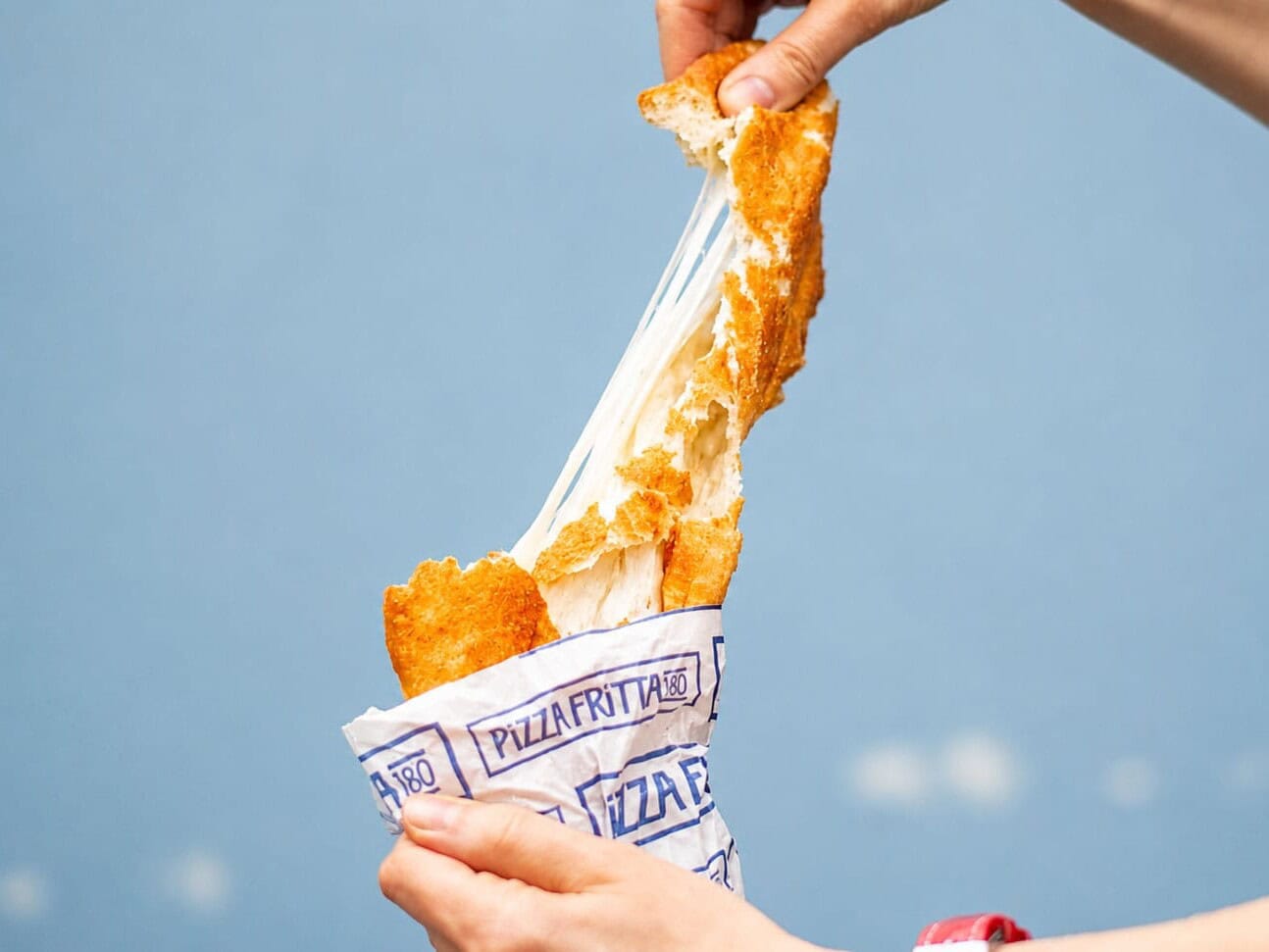
Whole golden Neapolitan pizza fritta served fresh at Pizza Fritta 180, showcasing authentic Italian street food in Sydney

Is Pizza Fritta Greasy? Why Proper Fried Pizza Is Surprisingly Light

It’s the question almost everyone thinks β€” even if they don’t say it out loud.

“Fried pizza… that must be heavy.”
“Surely it’s greasy?”

Totally fair. Fried food has a reputation, and pizza fritta sounds like it should be dripping in oil. But here’s the thing β€” when it’s made properly, it isn’t. Not even close.

Proper pizza fritta is crisp on the outside, cloud-soft inside, and lighter than most people expect. The surprise is real, and it’s the same reaction we hear from first-timers at Pizza Fritta 180 in Surry Hills almost every week.

So why the bad rap? And what actually keeps it from being greasy? Let’s get into it.

πŸ‘‰ Discover authentic Neapolitan pizza fritta in Sydney

Where the “greasy” assumption comes from

Most of us learned about fried food from fast food β€” stuff that sits under heat lamps, gets blotted with paper towels, and leaves your fingers shiny for an hour. That’s the frame most people bring to pizza fritta, and it’s the wrong one entirely.

Italian frying has a completely different goal. Whether it’s arancini in Sicily, fritto misto along the coast, or pizza fritta in Naples β€” the aim has never been to drown food in oil. It’s to create texture: a crisp exterior that gives way to something soft and steaming inside. The oil is the method, not the flavour.

That’s a meaningful distinction, and it changes everything about how pizza fritta feels to eat.

Temperature is everything

If you want to understand why proper pizza fritta isn’t greasy, start with the oil temperature. It’s probably the single biggest variable β€” and the one that separates a good pizza fritta from a bad one.

When the oil is hot enough, the dough hits it and seals almost instantly. The moisture inside converts to steam before oil has any chance to penetrate. The result is a light, hollow interior and a shell that crackles when you bite through it.

When the oil is too cool, the opposite happens. The dough sits there absorbing fat while it slowly cooks through. The texture turns dense and heavy, and you end up with exactly the kind of greasy pizza people were worried about in the first place.

Pizza fritta is meant to cook fast. That speed β€” not any special ingredient or technique trick β€” is what keeps it light.

πŸ‘‰ Taste the difference technique makes

Why the dough itself matters

Pizza fritta isn’t made from batter. It starts with real, properly fermented pizza dough β€” the same kind used for Neapolitan pizza β€” and that matters more than most people realise.

Good dough has structure. It stretches, it traps air, and when it hits hot oil, those air pockets expand rapidly, lifting the dough from the inside. That’s what creates the characteristic lightness β€” not just the frying method, but the dough itself doing its job. When you tear open a pizza fritta and a curl of steam escapes, that’s exactly what’s happening: steam, not oil, filling the interior.

Dough quality is something we take seriously at Pizza Fritta 180. The fermentation, the hydration, the rest time β€” it all contributes to the final texture, and you can taste the difference.

Fillings: restrained on purpose

The other thing that keeps pizza fritta feeling balanced is what goes inside it. Traditional fillings β€” ricotta, fior di latte, a little cured meat, maybe some vegetables β€” are rich but never excessive.

That restraint isn’t accidental. Overfill a pizza fritta and you trap moisture, which undermines the structure and makes the dough soggy from the inside out. Italian cooking has always understood that balance matters more than abundance, and pizza fritta is a good example of that philosophy in action.

πŸ‘‰ See how it plays out on the plate

Fried doesn’t automatically mean unhealthy

Nobody’s calling pizza fritta a health food. But “fried” doesn’t automatically make something worse than its baked equivalent β€” especially when you look at how it actually cooks.

Because pizza fritta spends so little time in the oil and the exterior seals quickly, oil absorption is minimal. The inside stays soft without drying out. And because the texture is so satisfying β€” that contrast between crisp shell and airy interior β€” most people feel content sooner than they would after eating a large, heavily topped baked pizza.

Like most things in Italian food culture, it comes back to quality and proportion. Made well, with good dough and thoughtful fillings, pizza fritta sits comfortably in that tradition.

Pizza fritta vs “deep-fried pizza”: not the same thing

This is where a lot of confusion lives. “Deep-fried pizza” can mean a lot of things β€” battered slices, leftover pizza chucked in a fryer, the kind of novelty food you find at a county fair in the US. Pizza fritta is none of those things.

Pizza fritta is purpose-made. The dough is specifically prepared for frying, cooked fresh to order, and rooted in a Neapolitan street food tradition that goes back centuries. It’s not a gimmick or a fusion twist β€” it’s its own thing, with its own technique and its own identity.

Understanding that distinction is part of understanding why pizza fritta tastes the way it does.

πŸ‘‰ Learn what pizza fritta really is

Is pizza fritta filling?

Yes β€” but not in the way that has you unzipping your jeans halfway through the meal.

It’s satisfying and comforting in the way good Italian food tends to be. But because the interior is airy rather than dense, you don’t get that heavy, weighed-down feeling afterwards. It’s indulgent without being overwhelming, which makes it particularly good for sharing β€” a few people tearing into it together, passing around sides, taking their time.

πŸ‘‰ Perfect for sharing

How Italians eat pizza fritta β€” and why it works

In Naples, pizza fritta has always been social food. It’s folded and eaten on the street, or laid out at the table and shared across the group. It’s rarely a solo, single-serving occasion.

That social rhythm matters. When you’re eating slowly, sharing pieces, talking between bites β€” you naturally end up eating in a more balanced way. The experience itself shapes how much you eat and how you feel after. It’s worth keeping in mind when you order at Pizza Fritta 180: lean into the sharing-food spirit and you’ll get the full picture of what pizza fritta is supposed to be.

πŸ‘‰ Make a night of it

Dine in vs takeaway: does freshness change everything?

Pizza fritta is at its absolute best eaten immediately β€” that crackle when you bite through the shell, the steam that escapes, the contrast of textures while everything is still hot. There’s nothing quite like it fresh.

That said, it holds up better than you might expect as takeaway. Pizza fritta was designed as street food, so the structure is built to travel. The exterior stays reasonably intact, and the interior doesn’t collapse. The key is ordering thoughtfully and eating it while it’s still warm rather than letting it sit for an hour.

πŸ‘‰ Eating at home tonight?
πŸ‘‰ Order now

So β€” is pizza fritta greasy?

When it’s made right? No. Not at all.

What you actually get is something crisp and light, with a steamy, airy interior and a flavour that’s deeply satisfying without ever feeling heavy. It’s a completely different experience from what most people picture when they hear “fried pizza” β€” and that gap between expectation and reality is exactly why first-timers tend to order a second one.

The only way to really get it is to try it fresh, made properly, by people who know what they’re doing.

πŸ‘‰ Experience pizza fritta the way it’s meant to be

Frequently Asked Questions

Proper pizza fritta shouldn’t feel greasy. When it’s fried hot and fast, the dough seals almost immediately and stays light inside, which prevents oil from being absorbed. The result is a crisp exterior and an airy, steamy interior.

Because it cooks at high temperature, the exterior seals almost instantly. The moisture inside the dough turns to steam, filling the interior and creating an airy pocket that keeps oil out. It’s the heat that does the work.

Not necessarily β€” and many people find it lighter. Because the interior is airy rather than dense, and because it’s typically eaten as a shared dish, pizza fritta often leaves you feeling more satisfied than heavy than a large baked pizza loaded with toppings.

Pizza fritta is indulgent, but it’s made from real, fermented dough and cooked quickly. Like most Italian food, it’s about balance and quality ingredients rather than excess. When made well, oil absorption is minimal.

Dine-in delivers the full experience β€” fresh from the oil, with that crackle and steam intact. But pizza fritta also travels well thanks to its sturdy structure and street-food origins. The main thing is eating it while it’s still warm.


Close-up of golden Neapolitan fried pizza served fresh at Pizza Fritta 180, one of Sydney’s best pizza spots

What Is Pizza Fritta? Italy’s Golden, Fried Pizza Explained

Pizza fritta is one of Italy’s best-kept secrets β€” a dish that actually predates modern pizza and captures the soul of Neapolitan street food in a single, golden bite. Crispy on the outside, soft and airy within, it’s a flash-fried, folded pizza that delivers serious flavour without the heaviness you might expect.

Yet outside Naples, most diners have never tried it β€” or assume it’s just “deep-fried pizza”.

It isn’t. Not even close.

Pizza fritta is its own tradition, with a history, a technique, and an eating culture that make it one of Italy’s most beloved comfort foods. And in Sydney, it’s finally getting the spotlight it deserves.

A Neapolitan Street Food with Deep Roots

Pizza fritta was born in Naples, long before wood-fired ovens became the norm. Street vendors sold it as an affordable, filling meal β€” made with simple dough and whatever ingredients were on hand. Instead of baking, pizzaioli would fry the dough quickly in hot oil, then fold or fill it with ricotta, mozzarella, cured meats or vegetables. Portable, satisfying, deeply comforting β€” perfect for busy streets and late nights.

To this day, it remains a cornerstone of Neapolitan food culture, especially during festivals and celebrations. It’s not a modern trend or a reinvention. It’s just always been there, for the people who knew where to look.

So, What Exactly Is Pizza Fritta?

Pizza fritta starts with traditional pizza dough β€” not batter, not pastry. That dough is stretched by hand, sealed with fillings, then flash-fried at high temperature until golden and crisp.

The key is speed and heat. The dough hits the oil and seals almost instantly, trapping steam inside. What emerges has that signature contrast β€” a light, shattery crust with a soft, airy interior. It’s not greasy. It’s not heavy. And it’s nothing like fast food.

Pizza Fritta vs Traditional Pizza

Both start with dough, but that’s roughly where the similarities end. Baked pizza is open-faced β€” you see the toppings, the char, the sauce. Pizza fritta is sealed and intimate. You tear it open. Steam escapes. The filling reveals itself.

Where baked pizza is built for the table, pizza fritta is built for the hands. It’s the kind of food that naturally creates a moment β€” passed around, pulled apart, eaten while it’s still too hot and nobody cares.

Why Pizza Fritta Isn’t Greasy

This is the question that comes up most, and it’s worth answering properly.

Proper pizza fritta is fried hot and fast. The dough seals the moment it hits the oil, which means oil doesn’t have time to penetrate. Steam builds inside, keeping the interior light. Think of well-made tempura, or a perfectly fried arancino β€” the technique matters far more than the cooking method itself.

When it’s done right, pizza fritta feels indulgent in the best possible way. Rich and satisfying, but never overwhelming.

The Fillings: Simple, Italian, Balanced

Pizza fritta follows the same philosophy as great Neapolitan cooking: less, but better. Traditional fillings β€” ricotta and mozzarella, prosciutto or salami, tomato and basil, seasonal vegetables β€” are chosen to balance richness and freshness. The dough itself is the star. The filling is the supporting act that makes it whole.

How Italians Eat Pizza Fritta

In Naples, pizza fritta is never rushed. It’s eaten hot and fresh, with your hands, usually shared. It’s the kind of dish that invites conversation β€” torn open at the table, passed around, compared bite by bite. That ritual is just as much a part of the experience as the flavour itself.

Bringing Pizza Fritta to Sydney

At Pizza Fritta 180, pizza fritta is made with genuine respect for its Neapolitan roots β€” traditional dough, carefully controlled frying, and Italian-inspired fillings that let the technique speak for itself. The aim isn’t novelty. Surry Hills is a natural home for it: a neighbourhood with energy, creativity, and late-night culture that matches the spirit of the dish.

πŸ‘‰ Explore Neapolitan pizza fritta in Sydney
πŸ‘‰ View the Pizza Fritta 180 menu

Why Pizza Fritta 180 Is Different

Pizza Fritta 180 focuses entirely on this one iconic dish β€” refining it rather than diluting it. The dough is developed specifically for frying. The technique is high-temperature and fast. The fillings are balanced, the menu designed for sharing.

It’s not a gimmick. It’s a revival of something that was never really gone β€” just waiting for the right kitchen.

πŸ‘‰ Visit Pizza Fritta 180 in Surry Hills
πŸ‘‰ Book a table at Pizza Fritta 180

Pizza Fritta and Italian Food Culture

In Italy, fried food isn’t indulgence β€” it’s tradition. From arancini to fritto misto, frying has always been used to enhance texture without overpowering flavour. Pizza fritta sits proudly within that lineage. Celebratory, comforting, and meant to be shared.

Ready to Try Pizza Fritta?

Pizza fritta isn’t something you fully understand by reading about it. You understand it when the dough cracks softly as you tear it open, when steam escapes from the centre, when the filling melts into the crust. That’s the moment it clicks.

πŸ‘‰ Experience authentic pizza fritta in Sydney

Frequently Asked Questions

Pizza fritta is authentic Neapolitan fried pizza β€” fresh pizza dough that’s sealed (often folded or filled) and flash-fried until golden. It’s crisp on the outside, soft and airy inside, and traditionally made as a street-food classic from Naples.

Proper pizza fritta shouldn’t feel greasy. When the oil is hot enough and the dough is cooked quickly, the outside seals and crisps while the inside stays light and steamy.

Pizza fritta is fried rather than baked, which creates a crisp shell and airy interior. Regular pizza is baked in an oven and is typically open-faced with toppings visible on top.

Not exactly. “Deep-fried pizza” can refer to a range of fried pizza styles, but pizza fritta specifically refers to the Neapolitan tradition β€” pizza dough cooked hot-and-fast, usually folded or filled, with a focus on light texture and balanced Italian ingredients.

It can be surprisingly light. Pizza fritta is rich and satisfying, but it’s designed to be airy inside β€” especially when it’s made with the right dough and fried at the right temperature.

Start with a signature pizza fritta, add a classic antipasto or side, and pair it with something from the drinks list. If you’re dining with friends, ordering a few things to share is the best way to experience the textures and flavours.

Pizza fritta is the hero, but Pizza Fritta 180 also offers a broader Italian dining experience β€” other pizzas, antipasti and classic Italian dishes.

Yes β€” Pizza Fritta 180 offers a takeaway menu and online ordering for when you’re eating on the move.

Bookings are recommended, especially on weekends and during busy periods.

Pizza Fritta 180 is located in Surry Hills, Sydney β€” right in the heart of one of the city’s most vibrant dining precincts.


Luigi Esposito smiling in front of Pizza Fritta 180 signage promoting the Surry Hills reopening on August 23

Why Pizza Fritta Is So Popular (And Why Sydney Is Falling In Love With It)

Pizza fritta has been feeding Neapolitans for over a century. Outside Italy, though, most people are only just discovering it β€” and once they do, they tend to wonder why it took so long.

So what makes it so enduring? Why does Naples guard it so fiercely? And why are Sydney diners, particularly around Surry Hills, suddenly head over heels for a folded, fried pocket of dough?

The answer isn’t simply that it’s fried. Pizza fritta offers something most pizzas don’t β€” contrast, nostalgia, portability and a little theatre, all in the same bite.

πŸ‘‰ Discover Authentic Neapolitan Pizza Fritta In Sydney

It Was Born From Necessity (And That Still Matters)

Pizza fritta rose to prominence during World War II. Wood for ovens was scarce, and certain toppings had become expensive or impossible to source. Frying dough in oil was faster, cheaper and required almost nothing beyond a pot and heat.

What began as a workaround quietly became a tradition.

The technique β€” flash-frying at around 180 degrees β€” sealed the dough almost instantly, locking in steam and keeping the interior soft while the outside turned golden and crisp. The result was something distinct: not a cheaper version of baked pizza, but a different thing entirely. More tactile. More immediate.

Pizza fritta wasn’t born as a substitute. It just never left.

πŸ‘‰ Learn What Pizza Fritta Actually Is

The Texture Is Genuinely Addictive

Ask anyone who’s had pizza fritta what they remember most, and they’ll usually describe the moment they tore it open. The exterior gives β€” lightly, satisfyingly β€” and a rush of warm steam escapes from a soft, airy centre. The filling, whether molten fior di latte or ricotta and salami, collapses into the dough.

That contrast is the whole point. Baked pizza offers chew and char. Pizza fritta offers crackle and steam. It’s closer to a perfectly made arancini than anything you’d pull from a wood-fired oven.

Indulgent, yes β€” but surprisingly not heavy when it’s made properly.

πŸ‘‰ Wondering If It’s Greasy?

It’s Built For The Street

Pizza fritta was never meant for a plate. It’s wrapped in paper, eaten standing up, held in one hand while the other gestures mid-story. That’s not an accident β€” it’s the whole design.

In Naples, vendors would fry batches and deliver them through neighbourhoods. Families would call orders down from balconies. Friends would grab one late at night, walking home from work. The food and the city were inseparable.

That street-food DNA hasn’t faded. It’s still there in every paper-wrapped order β€” casual, but crafted.

πŸ‘‰ See How Italians Eat It

It Feels Indulgent Without Tipping Over

“Fried” gives people pause. Fair enough.

But pizza fritta is flash-fried hot and fast. The dough seals in seconds, which means oil stays out rather than soaking in. The interior stays light because steam expands inside the pocket as it cooks. What you get is richness without weight β€” satisfying in the way that good comfort food is, not in the way that leaves you regretting it.

Most first-timers are genuinely surprised. Especially when it’s shared.

πŸ‘‰ Planning Your First Visit?

There’s Nothing Else Like It In Sydney

Sydney does excellent wood-fired pizza. Nobody’s arguing otherwise. But pizza fritta sits in a completely different category β€” sealed and filled rather than open-faced, crisp-shelled rather than chewy-based, eaten with your hands rather than sliced.

The flavours are familiar: tomato, mozzarella, salami, ricotta. What’s unfamiliar is everything else β€” the format, the texture, the way you eat it. That combination of recognisable and unexpected is genuinely exciting, and it’s not a gimmick. It’s a parallel tradition that never made it here until now.

πŸ‘‰ Explore The Full Menu

It Was Made For Sharing

Pizza fritta doesn’t really work as a solitary meal β€” or rather, it’s better when it isn’t one. Tear it open at the table, pass pieces around, order a few different fillings and work through them together. The meal finds its own rhythm: relaxed, unhurried, a little celebratory.

It turns dinner from a transaction into something worth lingering over.

πŸ‘‰ Make It A Night Out

It Has Cinematic Heritage

Pizza fritta became culturally iconic in part because of Sophia Loren. In The Gold of Naples (1954), her character eats one wrapped in paper on the street β€” joyful, unapologetic, completely at ease. That image has stuck for seventy years.

It’s not fine dining. It’s real dining. And there’s a reason that distinction still resonates.

It Fits Modern Sydney More Than You’d Expect

Pizza fritta feels old-world. It also fits perfectly into the way people want to eat right now β€” authentic, social, casually excellent, and different from the usual rotation.

Sydney diners are increasingly drawn to food with genuine history behind it: strong culinary roots, a reason for existing beyond novelty. Pizza fritta has all of that. And in a neighbourhood like Surry Hills β€” energetic, curious, a little irreverent β€” it feels less like an import and more like it belongs.

πŸ‘‰ Visit Us In Surry Hills

So Why Is Pizza Fritta So Popular?

Because it delivers on several levels at once β€” heritage, texture, portability, comfort, shareability β€” without overselling any of them. It’s nostalgic without feeling dated. Indulgent without being excessive. Different without being alienating.

That balance is harder to achieve than it sounds. And once you’ve had it fresh β€” shell cracking open, steam rising, filling still molten β€” it’s not hard to understand why Naples never stopped eating it.

πŸ‘‰ Try Pizza Fritta For Yourself

Frequently Asked Questions

Pizza fritta became popular because it was affordable, portable and deeply satisfying during times when oven-baked pizza wasn’t practical. Over generations it grew into a beloved street-food tradition rooted in community, neighbourhood culture and genuine culinary craft.

Not exactly. Pizza fritta is a traditional Neapolitan style where the dough is sealed β€” usually folded or filled β€” and flash-fried, creating a crisp golden exterior and a soft, steamy interior. It’s a distinct tradition, not simply a fried version of baked pizza.

When made properly, pizza fritta is surprisingly light inside. High-temperature frying seals the exterior quickly, preventing oil from penetrating the dough. Most first-timers are genuinely surprised by how balanced it feels.

The paper wrapping reflects pizza fritta’s street-food origins. It keeps the heat in, absorbs any surface oil and makes it easy to eat by hand while it’s still hot β€” exactly as it’s always been eaten in Naples.

It works beautifully shared. Tearing it open at the table, passing pieces around and ordering a mix of fillings is the most enjoyable way to eat it β€” social, relaxed and a little celebratory.