
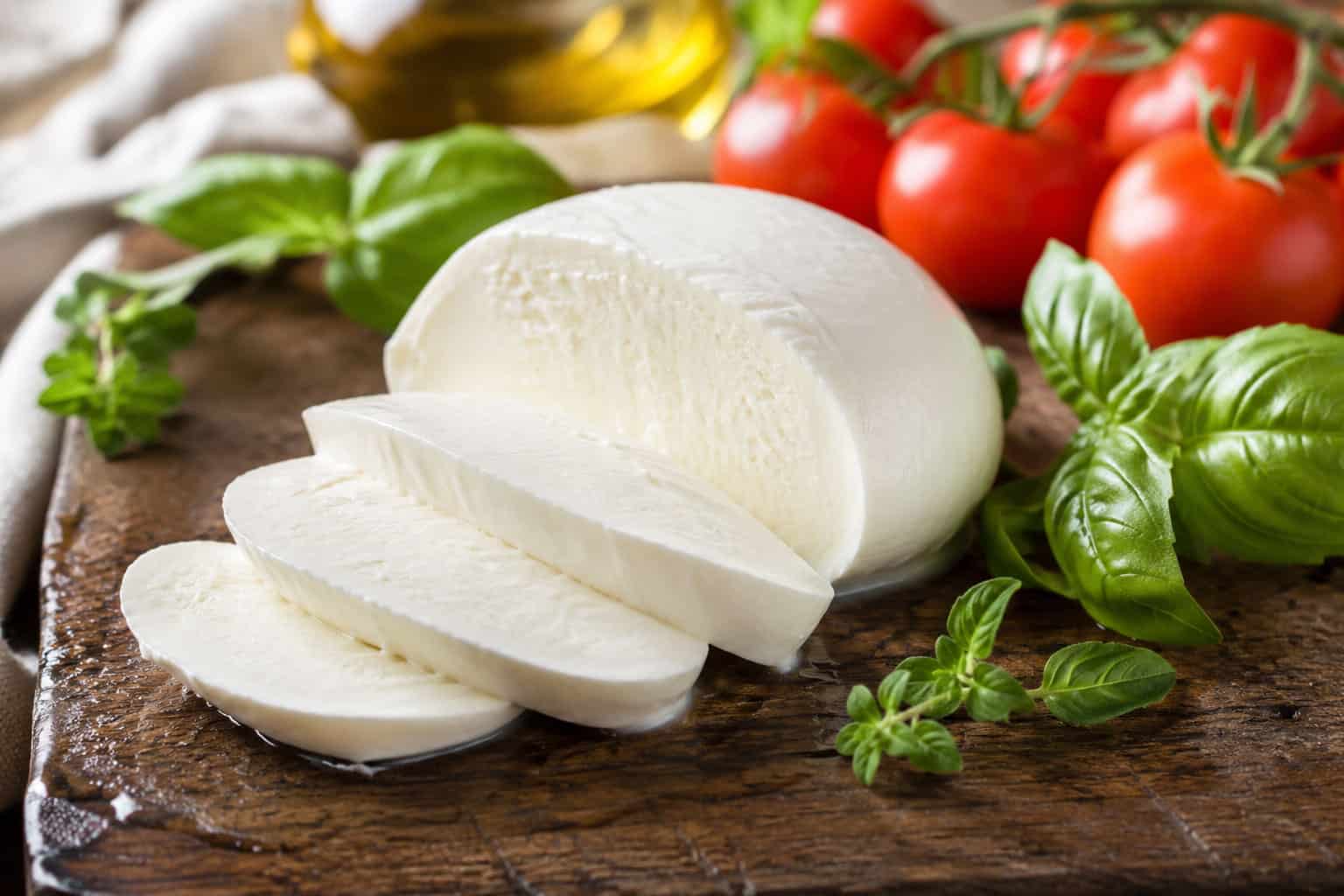
Ask someone what goes on a Neapolitan pizza and they’ll probably say mozzarella. Ask a Neapolitan pizzaiolo and they’ll ask you a follow-up question you might not expect: which one?
The distinction matters. Not as a technicality, but as a reflection of how seriously Naples has always taken its cheese — and how much the right choice shapes the pizza you end up with.
At Pizza Fritta 180, fior di latte features across the Neapolitan menu for the same reason it’s always featured in the tradition: it melts beautifully, it balances rather than overwhelms, and it lets the tomato and the dough do their jobs without interference. Understanding what fior di latte is — and what makes it different from its more famous cousin — is another way of understanding what makes a great Neapolitan pizza great.
What Is Fior di Latte?
Fior di latte translates directly as “flower of milk” — a name that tells you something about what it’s meant to taste like. It is a fresh, stretched-curd cheese made from cow’s milk, produced using the same pasta filata technique that also gives us buffalo mozzarella, scamorza and provolone. The curd is heated, pulled, and shaped while still soft and pliable — which is where the cheese gets its characteristic texture: smooth, slightly elastic, and yielding when sliced.
The result is a cheese that is clean and lactic in flavour, gently milky without being heavy, and moist enough to melt evenly and completely across a pizza base without pooling or separating. It is, in the plainest sense, a cheese designed for the heat.
Where It Comes From
The finest fior di latte historically comes from the Apennine communities around Agerola, in the Campania region — the same mountainous terrain south of Naples that has shaped Campanian food culture for centuries. Agerola sits at elevation, its pastures producing milk with a richness and creaminess that translates directly into the quality of the cheese. The fior di latte from this area carries a Protected Geographical Indication (IGP) — a recognition that its characteristics are tied to a specific place, and cannot be reliably replicated elsewhere.
More broadly, fior di latte is produced across southern Italy wherever quality cow’s milk is available. But as with San Marzano tomatoes, geography leaves its mark on the final product, and the Campanian version remains the benchmark.
Fior di Latte vs Buffalo Mozzarella: What’s Actually Different?
This is the question that trips up most diners outside Italy, and reasonably so — both cheeses are fresh, both are produced using the same stretching technique, and both appear on Neapolitan pizzas. The difference comes down to the milk source, and everything that follows from it.
Milk Source and Fat Content
Fior di latte is made from cow’s milk. Mozzarella di bufala Campana — the Protected Designation of Origin buffalo mozzarella — is made from the milk of Italian water buffalo, a breed that has been farmed in Campania since at least the mediaeval period. Buffalo milk contains roughly double the fat content of cow’s milk, along with higher protein levels and a more pronounced flavour.
That difference in fat changes the eating experience significantly. Buffalo mozzarella is richer, creamier and more intensely flavoured. Fior di latte is lighter, cleaner and more neutral — which, depending on the pizza, can be exactly what’s needed.
Moisture Content and How Each Melts
Buffalo mozzarella holds significantly more moisture than fior di latte. On a Neapolitan pizza, this creates a particular challenge: too much moisture can make the base soft and wet, especially in a very hot wood-fired oven where everything happens in under two minutes. Buffalo mozzarella is often torn into pieces and placed on the pizza after baking, or used on specific styles where its creaminess is the point rather than a potential problem.
Fior di latte melts more predictably. It loses less water during cooking, spreads evenly across the base, and integrates with the tomato sauce rather than sitting above it. For pizzas that go into the oven with cheese already on, fior di latte is frequently the more practical and reliable choice — and the one that produces the cleaner, more unified result.
Flavour Profile
Buffalo mozzarella has a characteristic tang — a slight acidity that comes from the fermentation process and the milk’s richness. It is unmistakeable and, in the right context, magnificent. Fior di latte is gentler: sweet, lactic, and almost neutral in a way that makes it highly versatile. It supports the other ingredients on a pizza rather than competing with them.
Neither is superior in absolute terms. They’re designed for different purposes, and understanding the distinction is part of understanding why the Neapolitan tradition has always been precise about which cheese belongs where.
Why Neapolitan Pizza Uses Both
The Associazione Verace Pizza Napoletana — the body that has formally codified authentic Neapolitan pizza since 1984 — recognises both fior di latte and mozzarella di bufala as appropriate for the Margherita. This isn’t indecision. It’s an acknowledgement that both cheeses are legitimate within the tradition, and that the choice between them depends on what the pizzaiolo is trying to achieve.
On a pizza that bakes at 480°C for sixty to ninety seconds, fior di latte performs with consistency: melting fully, integrating with the tomato, and finishing without the pools of liquid that high-moisture cheese can leave. On a pizza where buffalo mozzarella is used, the approach often changes — the cheese added after the bake, or used in smaller quantities to manage the moisture.
At Pizza Fritta 180’s dine-in menu, fior di latte is used across the Neapolitan pizza range — a deliberate choice that prioritises the clean, unified result that characterises the tradition at its most precise.
The Italian Philosophy Behind Fresh Cheese on Pizza
There is a temptation, especially in markets that have adopted Neapolitan pizza enthusiastically, to use more cheese. A thicker layer. A more generous distribution. An approach that treats cheese as the primary flavour rather than one element in a balanced whole.
The Neapolitan tradition resists this.
Fresh cheese on a Neapolitan pizza is there to provide fat, creaminess and a mild dairy sweetness that plays against the acidity of the tomato and the char of the crust. It’s not decorative, and it’s not the hero. The Margherita works because every element — San Marzano tomato, fior di latte, basil, extra virgin olive oil — is present in exactly the proportion needed. Change one, and the balance shifts.
That restraint is culturally specific. Italian cooking at its best is not about abundance — it is about rightness. The right cheese, in the right quantity, in the right position on a pizza cooked at the right temperature. Fior di latte earned its place in this tradition not by being the most impressive ingredient in isolation, but by doing exactly what a great pizza requires.
The Pasta Filata Family: Understanding How the Cheese Is Made
Fior di latte belongs to the pasta filata family — a group of stretched-curd cheeses that also includes buffalo mozzarella, scamorza, caciocavallo and provolone. The production process is what gives all of them their characteristic texture.
Fresh milk is acidified using natural cultures, then rennet is added to form the curd. Once the curd reaches the right acidity, it’s drained and submerged in hot water, where it becomes elastic and workable. The cheesemaker then stretches and folds the curd repeatedly — the filatura, or spinning — developing the smooth, layered structure that makes the cheese melt the way it does. The final ball is shaped by hand and dropped into cold salted water to set.
The whole process, from milk to cheese, can take just a few hours. Which is why fior di latte is almost always sold and used fresh — ideally on the day it’s made, or within a day or two. The difference between a fresh fior di latte and one that has sat for a week is immediately apparent in both texture and flavour: the fresh cheese is supple and milky, the older one firmer and more sour.
In Italy, this isn’t considered precious. It’s considered normal. Fresh cheese is perishable, and should be treated accordingly.
Fior di Latte at Pizza Fritta 180
On the dine-in menu at Pizza Fritta 180, fior di latte appears alongside Pecorino Romano, Grana Padano DOP and — on select pizzas — buffalo mozzarella. Each cheese is chosen for a specific reason, and the combination on any given pizza reflects the same approach that defines the ingredient choices across the entire menu: quality, authenticity and minimal intervention.
The Margherita at Pizza Fritta 180 is the clearest illustration. Three core flavours — Solania San Marzano tomato, fior di latte, fresh basil — in a ratio that has been refined over generations of Neapolitan tradition. Nothing is hidden. The fior di latte melts clean and even across the base, providing the fat and creaminess that holds the pizza together without obscuring the tomato beneath it or the crust around it.
Like the San Marzano tomato, fior di latte is an ingredient that rewards curiosity. Taste it alone and it tells part of the story. Taste it on the right pizza and it tells the rest.
👉 Reserve a table at Pizza Fritta 180 and taste how the right cheese — in the right proportion — changes everything.
Frequently Asked Questions
Fior di latte is a fresh, stretched-curd cheese made from cow’s milk. Its name translates as “flower of milk,” and it’s produced using the same pasta filata technique as buffalo mozzarella — heating and stretching the curd to create a smooth, elastic texture. It has a mild, lactic flavour and melts evenly under heat, making it a foundational ingredient in authentic Neapolitan pizza.
Fior di latte is made from cow’s milk; mozzarella di bufala is made from Italian water buffalo milk. Buffalo mozzarella is richer, creamier and more intensely flavoured, with higher fat and moisture content. Fior di latte is lighter and more neutral, melts more predictably under heat, and integrates more evenly with the other ingredients on a pizza. Both are authentic within the Neapolitan tradition, but they’re used differently.
The Associazione Verace Pizza Napoletana recognises both fior di latte and mozzarella di bufala Campana DOP as appropriate for the Margherita. In practice, fior di latte is commonly used for pizzas that bake in the oven fully topped, as it melts cleanly and holds less moisture. Buffalo mozzarella is sometimes added after the bake or used in smaller quantities to manage its higher moisture content.
Fior di latte’s pasta filata production process — stretching and folding the curd at heat — gives it an elastic, layered structure that melts smoothly and evenly without separating. It has a lower moisture content than buffalo mozzarella, so it releases less water during baking and integrates cleanly with the tomato sauce beneath it.
The most celebrated fior di latte traditionally comes from Agerola, a mountain community in the Campania region of southern Italy. Fior di latte di Agerola carries a Protected Geographical Indication (IGP) recognising that its quality is tied to the specific pastures and milk of that area. More broadly, high-quality fior di latte is produced across southern Italy, with Campanian producers setting the benchmark.
Not exactly. All fior di latte is a type of mozzarella — fresh, stretched-curd cow’s milk cheese — but the term “mozzarella” on supermarket packaging often refers to lower-moisture, industrial products that behave quite differently. Fresh fior di latte, made and used on the same day, has a texture, flavour and melting quality that are meaningfully different from aged or lower-quality alternatives.
Fior di latte is used across the Neapolitan pizza range at Pizza Fritta 180 in Surry Hills, Sydney — including on the Margherita alongside Solania San Marzano tomatoes, Pecorino Romano and Grana Padano DOP. The best way to understand what it contributes is to order something simple: fewer ingredients, nothing hidden, the cheese doing exactly what it’s meant to do.