
If you’ve ever wondered why we’re called Pizza Fritta 180, you’re already asking the right question.
That number isn’t a gimmick. It’s not a random brand flourish. It’s the technical detail that makes pizza fritta what it’s meant to be: crisp, airy, and shockingly light for something that’s fried.
In the world of Neapolitan street food, 180°C is the sweet spot. The moment where dough seals fast, steam does its magic, and the outside turns golden without the inside turning heavy. It’s the temperature that keeps pizza fritta from becoming “fried bread” — and turns it into something you crave again the second you finish.
👉 See what pizza fritta is (and why it’s different)
👉 Ready to taste it at peak crispness?
What Does “180” Actually Mean?
At Pizza Fritta 180, “180” refers to the temperature of the oil used to flash-fry pizza fritta.
This matters because frying isn’t just about heat — it’s about control. Too cool and the dough absorbs oil. Too hot and the outside darkens before the inside has time to puff, cook, and turn pillowy.
At around 180°C, the dough hits the oil and immediately begins to seal. The surface tightens, the bubbles form, and the interior turns steamy and light — creating that signature contrast: crackly exterior, soft centre.
The Science Of 180°C (Without The Lecture)
Let’s keep it deliciously simple. At 180°C, a few important things happen fast:
The Dough Seals Quickly
When dough hits properly heated oil, the outside cooks in moments. That quick seal helps reduce excess oil absorption and sets the foundation for a crisp shell.
Steam Expands Inside The Dough
Once the outside seals, moisture inside the dough turns to steam. Steam expands, and expansion creates lift — that’s the “puff” you see and the airy texture you feel.
You Get Crispness Without Heaviness
This is the part that surprises first-timers. When pizza fritta is done properly — hot and fast — it can feel balanced, not oily. That’s why “fried” doesn’t automatically mean heavy.
👉 Curious about the “is it greasy?” question?
Why Not 170°C Or 200°C?
Because pizza fritta is unforgiving — in the best way. Small temperature shifts change the entire experience.
If The Oil Is Too Cool
Lower temps can mean slower sealing and more time for oil to creep into the dough. The result can skew denser and heavier.
If The Oil Is Too Hot
Higher temps can brown the exterior too quickly. You might get colour before the interior has fully puffed and cooked — and the texture loses that signature “light inside” quality.
That’s why 180°C keeps showing up in traditional methods and reputable recipes — it’s a proven sweet spot for the texture pizza fritta is famous for.
What 180°C Tastes Like At The Table
Technical talk is nice, but here’s what you actually notice when you eat it.
The First Tear Is The Moment
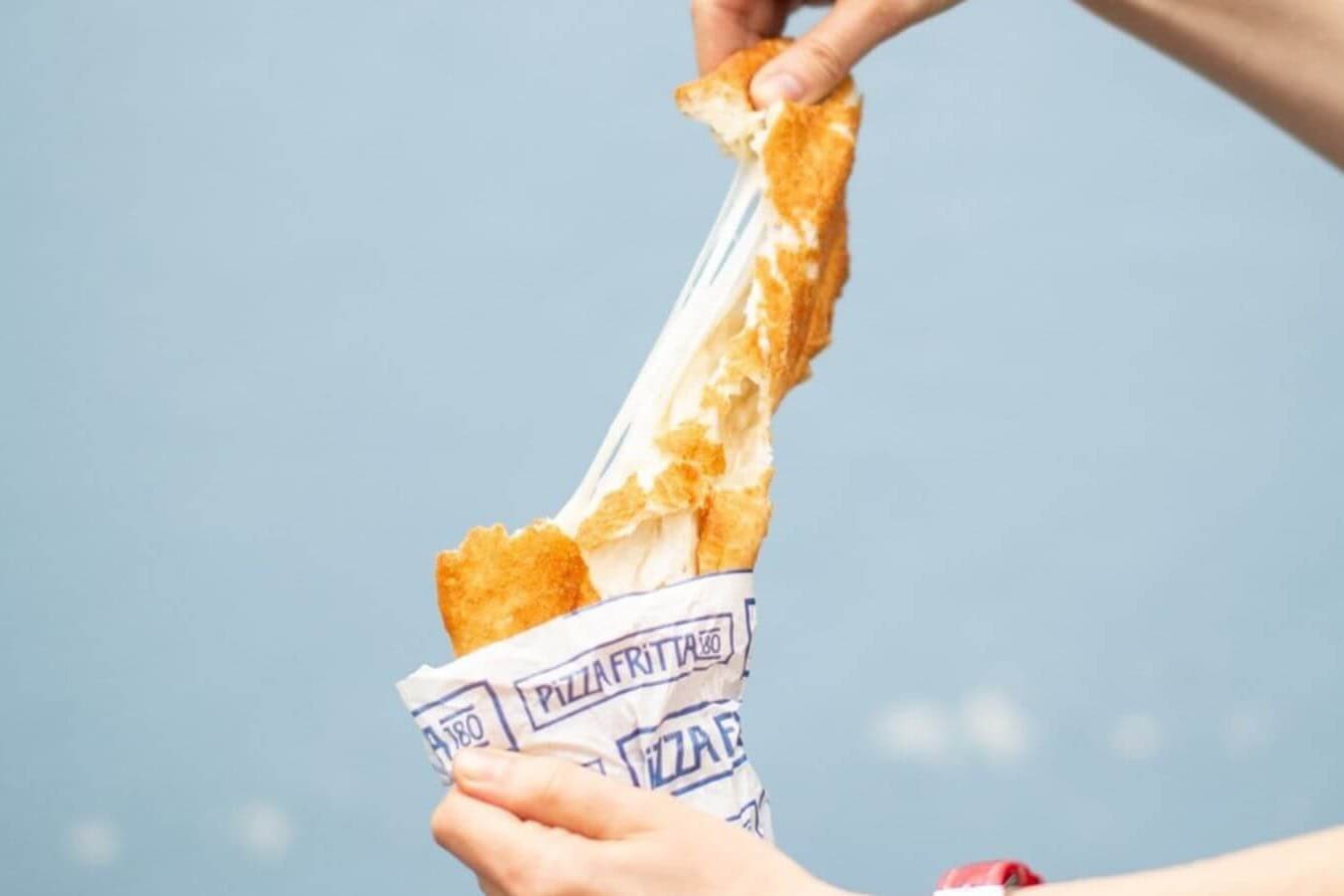
Pizza fritta is at its peak right after it’s cooked — when the exterior is still crisp and the interior is steamy and soft. Tear it open and you’ll feel that contrast immediately.
The Texture Is “Crackle + Cloud”
Baked pizza gives you chew and char. Pizza fritta gives you crackle and steam — a different kind of satisfaction, closer to the pleasure of perfect Italian street food.
It’s Made For Sharing
Because it’s tactile. You tear it. You pass it. You debate which bite was best. That’s not an accident — pizza fritta’s street-food roots are social at heart.
👉 Get the best eating approach (Naples-style)
The Naples Connection (And Why Technique Is Tradition)
Pizza fritta isn’t “new”. It’s a deeply rooted Neapolitan tradition — a food shaped by practicality, community, and incredible technique.
Even today, the method is part of the magic: traditional pizza dough, hand-stretched, then flash-fried to create a crisp shell that stays light inside.
At Pizza Fritta 180, this is central to who we are. Founder and head chef Luigi Esposito built Pizza Fritta 180 around bringing that Neapolitan experience to Sydney — rooted in the flavours and street-food culture of Naples.
👉 Read the story behind the venue
Why This Matters For First-Timers
Most first-time questions about pizza fritta come down to one word: fried.
People expect it to be heavy. They assume it’ll be oily. They imagine a “cheat meal” that hits hard and sits harder.
But when you understand 180°C, the whole thing clicks:
- Hot, fast frying seals the dough
- Steam creates lift and airiness
- The result is crisp, satisfying, and surprisingly balanced
So if you’ve been curious but hesitant, consider this your permission slip.
👉 Not sure what to pick on your first visit?
How To Get The Best Pizza Fritta Experience In Sydney
You don’t need to overthink it — just follow a few timeless rules.
Eat It Fresh
Pizza fritta rewards immediacy. The sooner you tear in, the better the contrast.
Share It Like Italians Do
Order with the table in mind. Mix flavours. Pass pieces around. Let everyone chase their favourite bite.
Lean Into The Vibe
Pizza Fritta 180 is built for lively nights in Surry Hills — casual, fun, and full of flavour. (Yes, it’s the kind of place where “one more” is always a good idea.)
The Bottom Line: 180°C Is The Difference Between “Fried” And “Fritta”
So the next time someone asks what the “180” stands for, you can tell them:
It’s the temperature that makes pizza fritta crisp, airy, and properly Neapolitan — the technique behind the texture, and the reason it doesn’t feel like what you expected when you heard the word “fried”.
And honestly? The best way to understand it is to taste it.
👉 Book a table and try pizza fritta at its crispiest
👉 Explore what’s on the menu
👉 Prefer your pizza fritta at home?
Frequently Asked Questions
It refers to the oil temperature (180°C) used to flash-fry pizza fritta.
At around 180°C, the dough seals quickly and steam expands inside, creating a crisp shell and airy centre.
When it’s made properly with hot, fast frying, pizza fritta can be light and balanced, not greasy.
Pizza fritta is a traditional Neapolitan style made from pizza dough that’s sealed (often folded or filled) and flash-fried until golden.
Eat it fresh and hot, and tear into it soon after it’s served to enjoy the crisp exterior and steamy interior.
Yes—pizza fritta’s street-food roots make it a naturally social, shareable dish.