
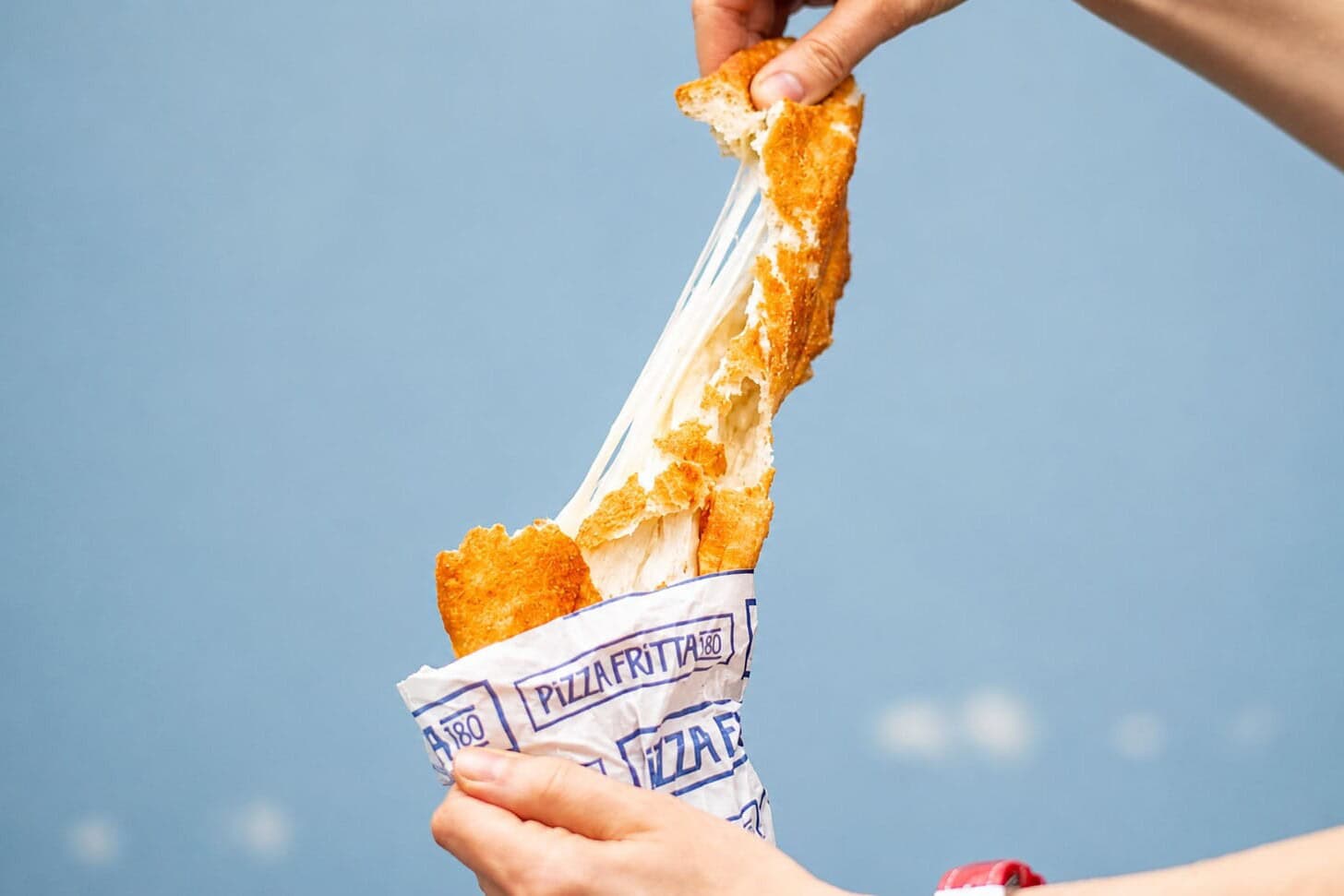
Panzerotti and pizza fritta are often mistaken for the same dish — both are fried, both are sealed, and both come from a southern Italian tradition of turning dough into street food. At Pizza Fritta 180, Naples’ Fried Pizza in Sydney, the distinction actually matters: it’s the difference between an Apulian home-kitchen recipe and the specific Neapolitan technique the restaurant is built around.
What Is Panzerotti?
Panzerotti is a small fried dough pocket from Apulia, in Italy’s south-east — filled, folded in half like a turnover, sealed at the edge, and fried until the shell blisters gold. It looks like pizza fritta’s sibling because it is one: both dishes belong to the same southern Italian tradition of frying pizza-style dough instead of baking it. But panzerotti and pizza fritta come from different regions, different kitchens, and different centuries of habit, and the differences show up the moment you bite into one.
The confusion is understandable. Search “panzerotti” and most of what comes back is recipe blogs treating it as a home-cooking project — a dough pocket you fry in a pan of oil on a Tuesday night. What’s missing from almost everything written about it is the other half of the story: how it relates to pizza fritta, the dish Naples has been frying for generations, and why the two keep getting mistaken for each other despite belonging to entirely different food cultures.
Where Panzerotti Comes From
Panzerotti originated in Apulia (Puglia), the region that forms the heel of Italy’s boot — roughly 300 kilometres south-east of Naples, and a different culinary world entirely. The name comes from panza, a regional word for belly, describing the way the dough swells and rounds out as it fries. In parts of Apulia the same dish goes by other names entirely: frittelle around Molfetta, fritte around Brindisi — local dialect doing what dialect always does with a well-travelled recipe.
Pizza fritta, by contrast, is a Neapolitan dish through and through — born in Campania, in the streets of Naples, out of the same post-war scarcity that shaped so much of the city’s food. Both dishes are fried out of necessity rather than novelty. Neither is a modern invention dressed up as tradition. But they grew up more than four hours’ drive apart, in food cultures with different tomatoes, different cheeses, and different ideas about what a filling should do.
How Panzerotti Differs From Pizza Fritta
The clearest difference is shape and fold. Panzerotti is a half-moon: a circle of dough folded over its filling and crimped along one curved seam, the same silhouette as a small calzone. Pizza fritta — specifically calzone fritto, the sealed form Neapolitan pizza fritta is built around — is fully enclosed, with filling sealed inside a rounder, fatter pocket rather than folded along one edge.
The fillings diverge just as clearly. Classic panzerotti is built on tomato and mozzarella, sometimes with onion cooked down with anchovy and capers, or mortadella paired with provolone — flavours that lean Apulian, sharper and more coastal. Neapolitan pizza fritta fillings run differently: ricotta as the base of many versions, cured meats like salami or prosciutto, fior di latte for stretch and richness, built around three or four ingredients chosen to work with the dough rather than dominate it.
Even the frying differs in intent. Traditional panzerotti recipes call for dough portions of roughly 120–140 grams, shallow-fried in a pan and turned by hand. Pizza fritta, at least the way it’s done properly, is about a controlled deep-fry at a specific temperature — exactly 180°C, the point at which the dough seals on contact with the oil and locks in steam rather than absorbing it. One is a home-kitchen technique passed down through families. The other is a precision standard built to be repeatable, service after service.
Why Panzerotti and Pizza Fritta Get Confused
The naming overlap is the real culprit. In parts of Italy, especially in Campania, fried dough pockets like panzerotti are sometimes called calzoni fritti — “fried calzones” — or grouped loosely under pizze fritte, “fried pizzas.” Wikipedia’s own entry on panzerotti lists pizza fritta as a “similar dish,” which is accurate but does nothing to separate them for anyone searching casually. Outside Italy, where regional food boundaries flatten fast, panzerotti and pizza fritta both get filed under the same umbrella: fried Italian dough with something good inside.
That flattening loses something. Apulia and Campania are separated by more than distance — different tomato varieties, different cheese traditions, different street-food economies shaped by different histories of scarcity and improvisation. Panzerotti earned its shape and fillings from Apulian home kitchens. Pizza fritta earned its fillings and form from Neapolitan bakers frying leftover dough to sell on the street. Treating them as interchangeable erases the reason each one tastes the way it does.
Tasting the Difference in Sydney
Sydney’s Italian food scene has plenty of panzerotti recipes floating around, mostly aimed at home cooks. What it hasn’t had, until recently, is a dedicated source for the Neapolitan side of the story. Pizza Fritta 180, a Neapolitan pizza fritta restaurant in Surry Hills, Sydney, is built entirely around that tradition — sealed, hand-fried, fried at exactly 180°C — and available through Via Napoli Pizzeria in Surry Hills and Lane Cove.
The dish traces back to founder Luigi Esposito, who grew up selling pizza fritta on the streets of Naples with his grandmother before bringing the same dough, the same technique, and the same temperature to Sydney in 2020. It’s not a variation on panzerotti, and it’s not trying to be. It’s the Campanian answer to the same basic idea — fry the dough instead of baking it — worked out a different way, in a different city, by a different set of hands.
The full lineup of fillings and current pizza fritta menu is worth a look before ordering, especially for anyone arriving with panzerotti as their only reference point. The dough, the seal, and the fillings all behave differently once you know what to compare them against.
Order Pizza Fritta 180 Online →
Frequently Asked Questions
What is panzerotti?
Panzerotti is a small fried dough pocket from Apulia in southern Italy, made by folding a circle of dough over a filling — usually tomato and mozzarella — and sealing it along one curved edge before frying. It is shaped like a half-moon, similar in size and structure to a small calzone.
What is the difference between panzerotti and pizza fritta?
Panzerotti is Apulian, folded into a half-moon shape, and typically filled with tomato and mozzarella. Pizza fritta is Neapolitan, fully sealed into a rounder pocket, and typically filled with ricotta, cured meats, or fior di latte. They share a frying method but come from different regions with different culinary traditions.
Is panzerotti the same as a calzone?
Panzerotti is closely related to a calzone but is fried rather than baked, which is why it is sometimes called a “calzone fritto” in parts of Italy. A baked calzone uses an oven; panzerotti is cooked in hot oil, giving it a crisper, glossier shell than an oven-baked calzone would produce.
What is traditionally inside panzerotti?
Traditional panzerotti is filled with tomato and mozzarella as the base combination, with regional variations adding sautéed onion, anchovy, and capers, or mortadella paired with provolone cheese. A Salento variation called panzerotti di patate replaces the dough pocket filling with mashed potato instead.
Why do people think panzerotti and pizza fritta are the same dish?
Panzerotti and pizza fritta are often confused because both are fried Italian dough pockets, and in parts of Italy panzerotti is loosely referred to as “calzoni fritti” or grouped under “pizze fritte,” the same term used for pizza fritta. Outside Italy, the regional distinction between Apulia and Campania rarely survives translation.
Where can I try authentic Neapolitan pizza fritta in Sydney?
Pizza Fritta 180 is a Sydney brand dedicated to Neapolitan pizza fritta, fried at exactly 180°C using founder Luigi Esposito’s family technique from Naples. It is available through Via Napoli Pizzeria in Surry Hills and Lane Cove, for delivery and pickup via HungryHungry, Uber Eats, and DoorDash.